Filter cloths
A filter cloth is the working textile in a filter press. It lets liquid pass while retaining solid particles. Together with the filter cake, it influences filtration performance and the result of each cycle.
How a filter cloth works

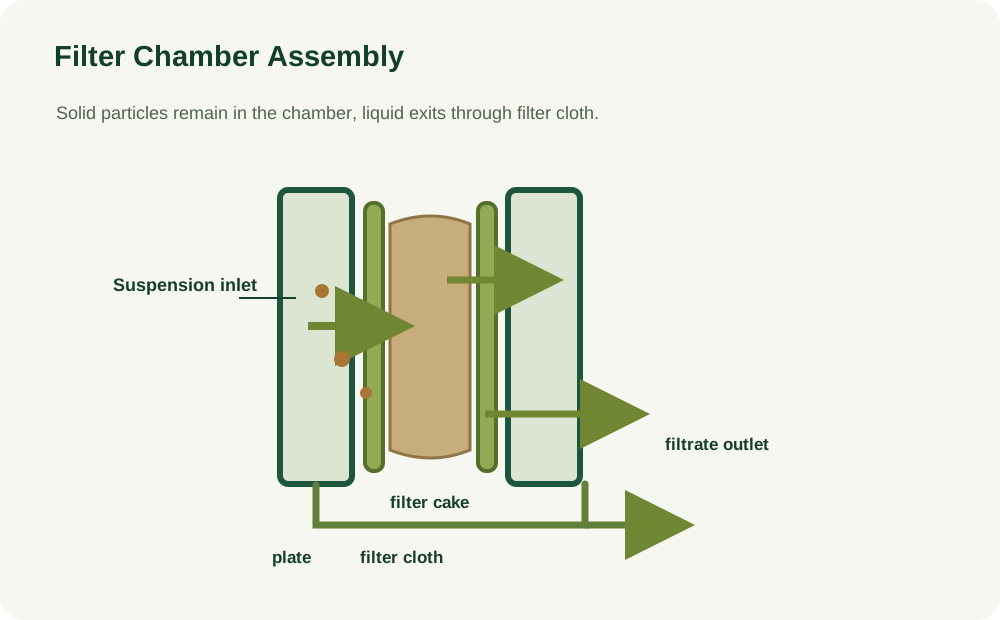
The filter cloth rests against the filter plate and covers its drainage surface. As the slurry is pumped into the press, liquid passes through the fabric and into the plate drainage channels. Solid particles are retained on the surface or within the pores. A filter cake gradually forms and provides an additional layer of separation.
How the cloth and filter cake affect the cycle
At the start of a cycle, the cloth affects the capture of the first particles and the clarity of the filtrate. As the cake builds, the cloth and cake filter together: the fabric supports the cake and drains the filtrate, while the cake captures more solids and increases flow resistance. At the end of the cycle, the cake must release so the cloth can be used again. Blinding, leakage or uneven dewatering therefore cannot be assessed by looking at the fabric alone; the slurry, plate and operating conditions also matter.
What determines the choice
The cloth must suit the process, filter press and required result:
- filter-press type and plate dimensions
- slurry composition, temperature, density and viscosity
- particle size, shape, concentration and abrasiveness
- required filtrate clarity, cycle time and cake dryness
- fabric polymer, weave, porosity and surface finish
- cycle frequency and washing or cleaning method
Main designs and where they are used
The design determines how the cloth covers the filter plate, how slurry enters the chamber and how the cloth is secured. Common designs differ in construction and in the filter presses they suit.
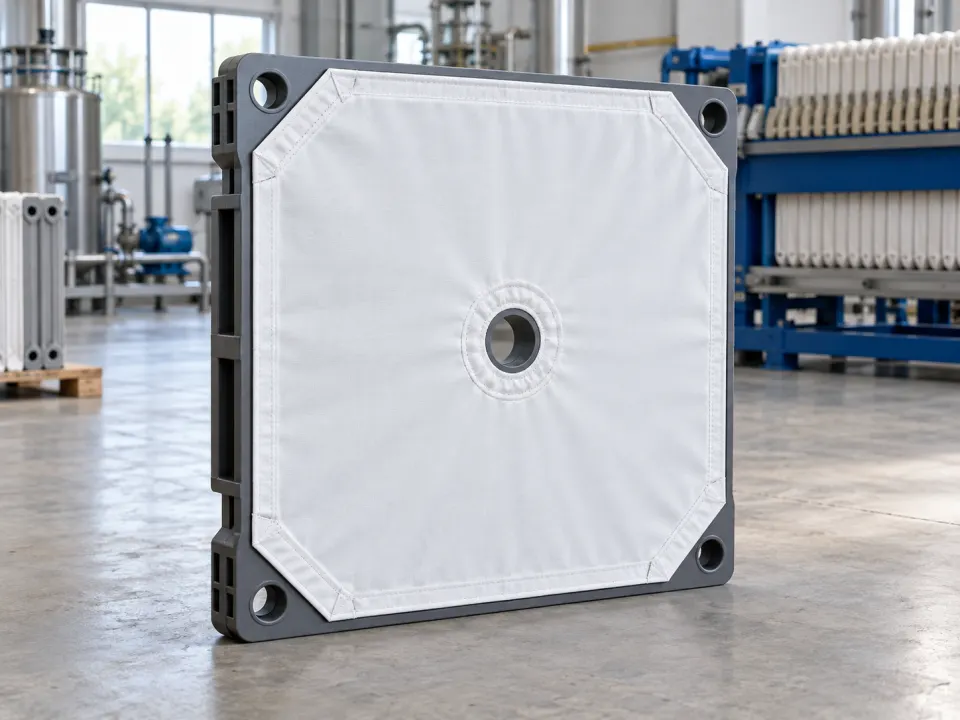
Flat filter cloths
A single piece of fabric used at the leading and trailing positions in a filter-press plate pack. Suitability depends on the end-plate design and fastening method.
View this design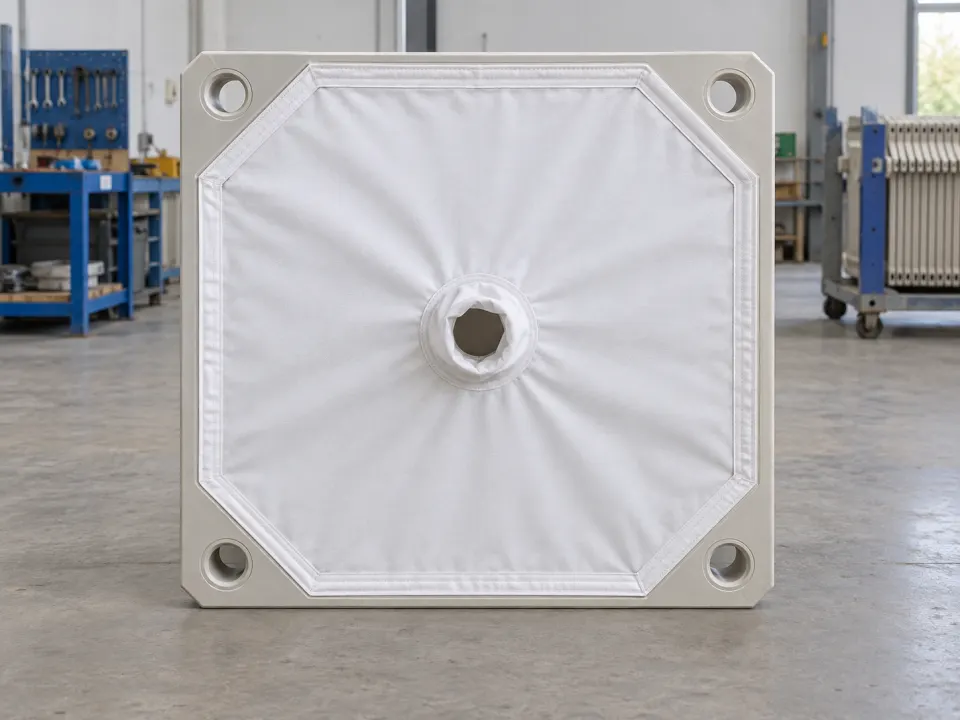
Necked filter cloths
A common design for chamber filter presses. The neck aligns with the feed opening and must match the plate dimensions and fastening method.
View this design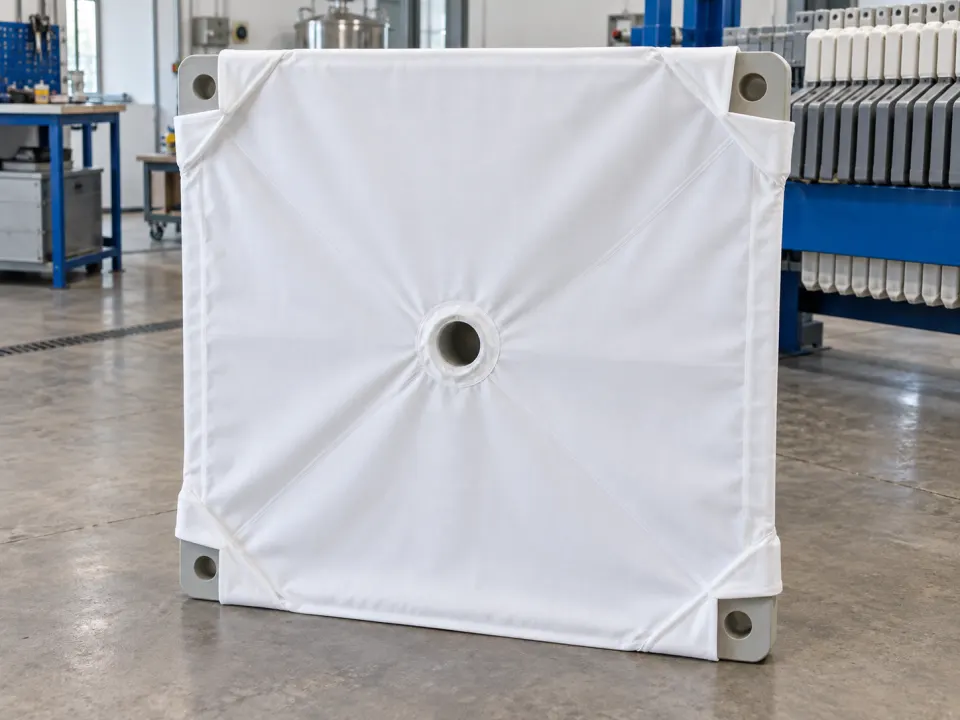
Throw-over filter cloths
A single-piece cloth folded over the plate. It is used with presses that have a through-bolt; fitting can be more involved and depends on the press design.
View this design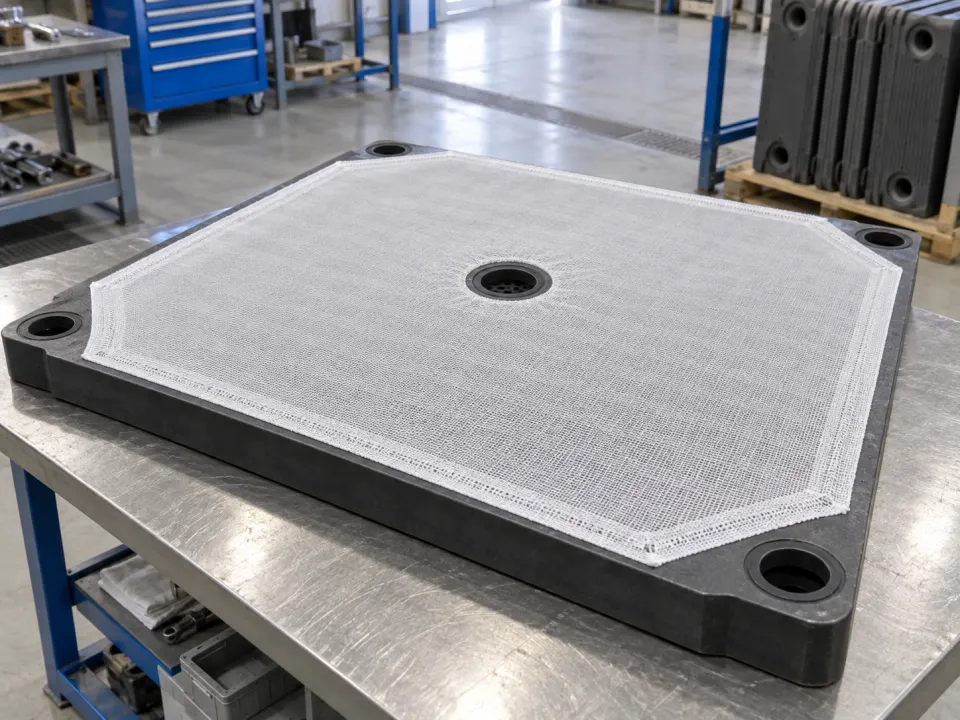
Backing filter cloths
An additional layer placed beneath the working cloth. Depending on the setup, it can support drainage, protect the main cloth or compensate for uneven plate surfaces.
View this designFastening and sealing are selected to suit the plate and the cloth position in the pack. Options include pegs, hook-and-loop fasteners and a perimeter seal; openings and necks can be reinforced where needed. Exact dimensions and details are specified for the filter press.
Fabric and material
The polymer mainly determines chemical and temperature resistance. Weave, yarn type, fabric density and surface finish affect flow, particle capture, stability and cake release. These properties are selected together to suit the slurry and operating conditions. Read more about filter fabrics and materials.
Information for an assessment
These details are most useful:
- filter-press type and plate identification or dimensions
- description of the slurry, its temperature and chemical environment
- required filtrate quality and cake dryness
- shape of the existing cloth and its fastening method
- description of the operating issue, with photos or a sample if available
For how the cake forms, see Cake filtration. For how the equipment works, see Filter presses and plates.