cake filtration
In cake filtration, solid particles are captured on the filter partition and form a layer through which the liquid continues to pass. Its growth affects flow, pressure and the resulting drainage.
What is cake filtration

The Cake filtration is suitable for separating the solid phase from the liquid suspension when the trapped sludge is to remain on the filter surface as a cake. It is used, for example, in batch pressure filters; the equipment is chosen according to the volume, suspension properties and process goal.
How it works
In the beginning, particles are captured by the filter partition itself, for example filter cloth. As soon as the first layer of the cake is formed, part of the filtration begins to take place through this layer, and its structure then significantly affects the speed and result of the process.
Simplified principle:
- suspension comes to the filter surface
- liquid passes through filter cloth or other baffle
- the solid particles remain on the surface and form a cake
- the growing cake further affects the passage of the liquid and the resulting separation
Why it is important
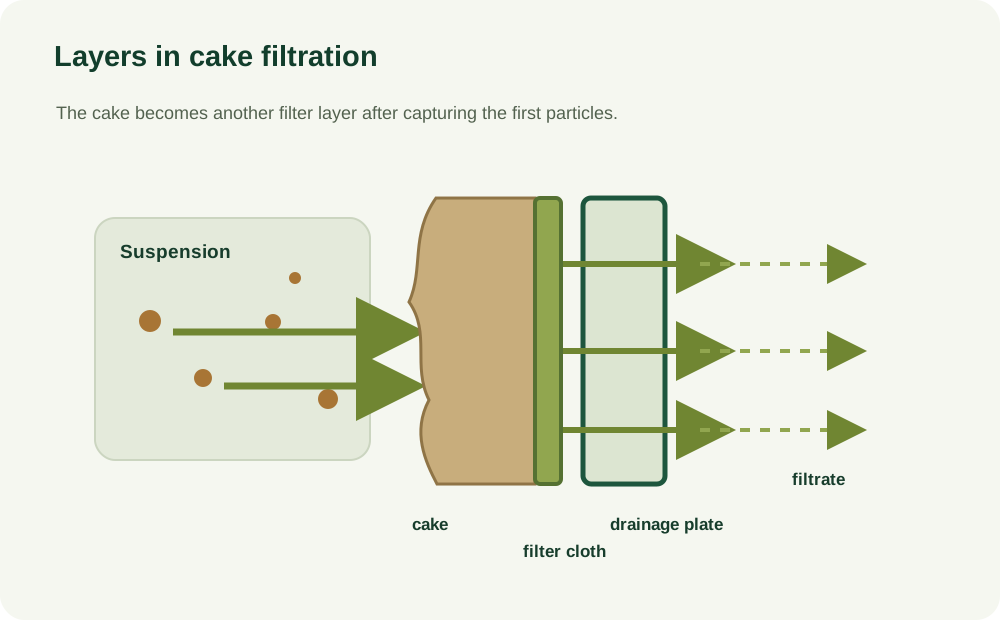
As the cake layer grows, the resistance to flow usually increases. The operation therefore seeks a balance between filtration speed, filtrate purity and required dewatering. Slow flow may be related to particle properties, cake compressibility, filter cloths condition, or process settings.
What affects the course of
The course of cake filtration is most often affected by:
- size, shape and concentration of solid particles
- media chemistry and operating temperature
- structure and permeability filter cloths
- operating pressure and filter cycle length
- the required purity of the filtrate and the degree of dewatering
In some processes, the suspension is conditioned prior to filtration, for example by coagulation or flocculation. The desirability of such a step depends on the chemistry and the goal of the process; it is not a one-size-fits-all solution.
Cake filtration is often used inchamber and membrane filter presses. Filter cloth forms a partition on which the cake is caught.
Impact filter cloths
Filter cloth captures the first particles and drains the filtrate into the device; later it works with the cake layer. Its material, binding, surface and proper fit therefore affect the start of the cycle and the repeatability of operation.
Filter cloth must be considered together with the filter plate, suspension and operating mode. See GuideFilter cloths for details; product types can be found in the overviewfilter cloths.