Filter bags: how they work
Filter bag separate particles from liquid or protect a sensitive process from impurities. The size, material, seam and attachment are chosen according to the environment and method of use.
How the bag works

The liquid passes through the fabric and the particles are captured according to the design of the bag and the direction of flow. Efficiency and durability are affected by the material, permeability, seams and tightness of the fitting. The specific design differs depending on whether the bag filters liquid, captures particles at the electrode, or is used to drip food.
Two different applications
Food drip
Cheese makers drain the whey from curds when making curds and cheeses. The material must be harmless to health, strong and suitable for repeated mechanical stress. Among other things, polyamide monofilament fabric is used; the corresponding certification and operation requirements must be verified for the specific use.
Galvanic bath
Anode bags are placed on anode baskets or electrodes and limit the penetration of particles into the electrolyte. They are used in various galvanic processes, for example in copper, nickel or zinc baths. The bag must match the shape of the basket and the exact chemical environment; the usual material is polypropylene fabric or non-woven fabric. The shape can be flat or cylindrical.
Specific types includedrip bags (cheese pans) and anode bags; for other processes can be preparedcustom design.
Tailor-made construction
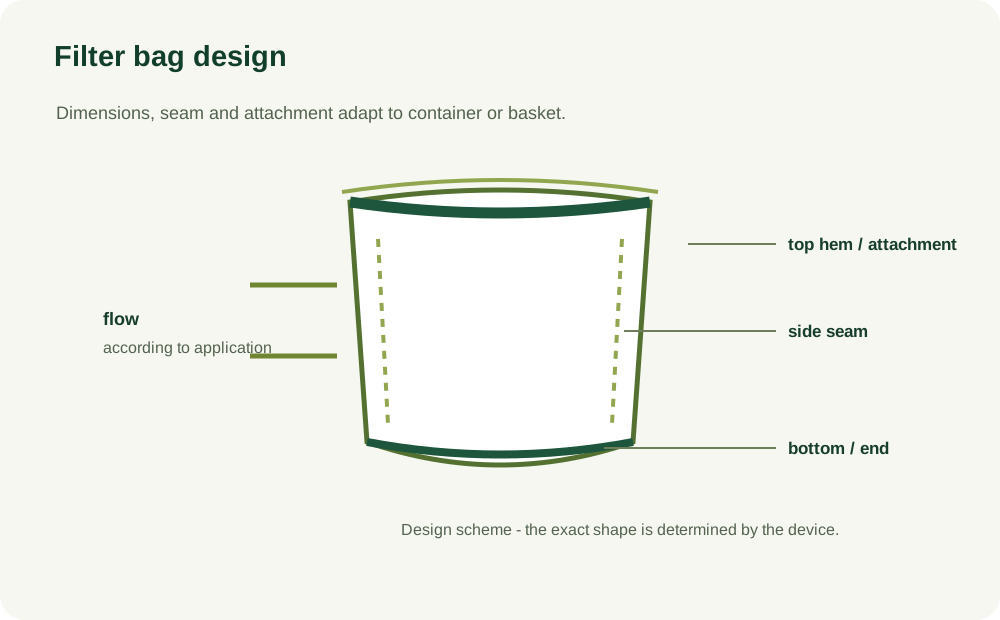
For proper operation, specify:
- the shape and dimensions of the container, basket or electrode
- flat, cylindrical or other designs
- material with adequate chemical, hygienic and temperature resistance
- seam type, reinforcement, bottom and possible multi-layer construction
- method of fixing, cleaning and mechanical stress
What to prepare for the design
For assessment help:
- the purpose of the bag and a brief description of the process
- dimensions and a photo of the container, basket or electrode
- chemical composition and temperature, possibly hygienic requirements
- method of attachment and required service life
- existing sample or drawing if available
OverviewDrip Bags, Anode Bags and Custom Filter Bagscan be found in the menu. For food use, the suitability of the specific material and the required document for the given operation must be verified.