Filter Fabrics
Fabric affects the passage of filtrate, particle capture and cake release. Here we focus on its construction; the chemical and temperature resistance of polymers is described on the Materials page.
What is filter fabric

A filter fabric is a functional fabric through which a liquid passes during filtration and solid particles are captured on its surface or in its structure. It is used as a base filter cloths, bags and other filter elements.
How it works
At the beginning of the cycle, particles are primarily captured by the structure of the fabric. With cake formation, filtration relies on a combination of fabric and trapped layer; the result also depends on suspension, pressure and cycle length.
The filter cloth in operation mainly affects:
- the rate of passage of the filtrate
- purity of the separated liquid
- filter cake formation and release
- the stability of the filter cycle during repeated use
What affects its properties
The behavior of the fabric is determined not only by the chemical composition of the fibers. The weave, yarn type, weave density, pore size and surface are also important, as they determine particle capture and cleanability.
In practice, the most often deciding factor is:
- fabric construction and weave
- warp and weft density
- diameter and type of fibers used
- character of particles and required purity of filtrate
Types of fabrics
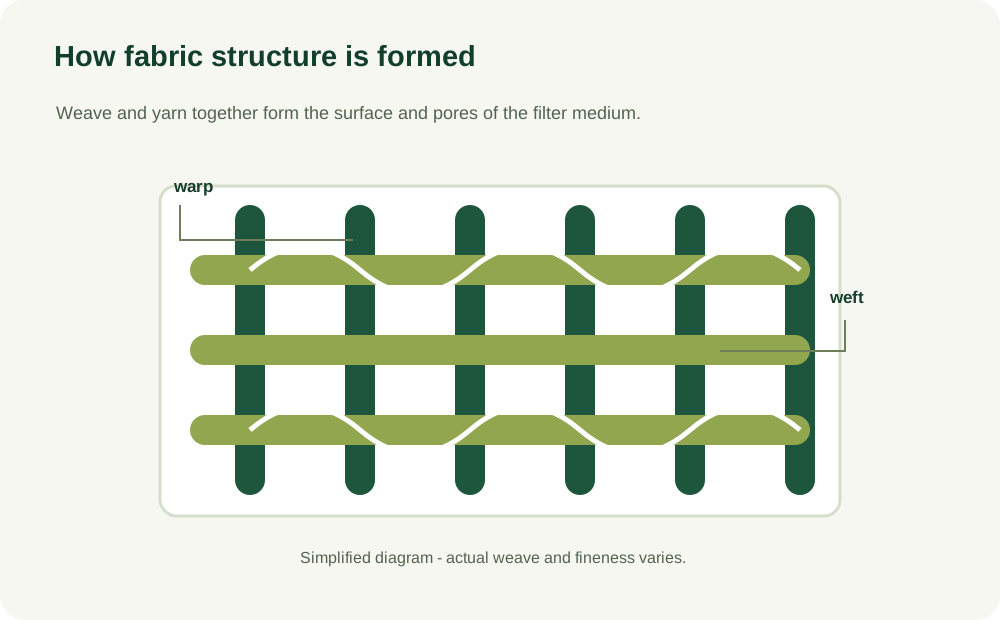
Weaving changes the surface and pore geometry of the fabric. However, its effect also depends on the yarn, delivery, treatment and suspension properties; the binding name alone does not determine the filtering result.
Cloth binding
Regular interlacing provides a stable structure. The specific permeability and capture of particles is also determined by the fineness of the yarns and the density of the weaving.
Twill weave
Staggering of the binding points creates a characteristic surface. Suitability for flow, durability and cake release is judged by the entire fabric construction.
Atlas and derived weaves
Longer floats can create a smoother surface. The effect on fouling and cleaning depends on the combination of weave, yarn, treatment and filter media.
Relation to materials
Polymer and its possible surface treatments determine chemical, temperature and other resistance; the construction of the fabric consists of the yarn and the weave. SeeMaterials for an overview of polymers. Specific designs are availableFilter cloths.